
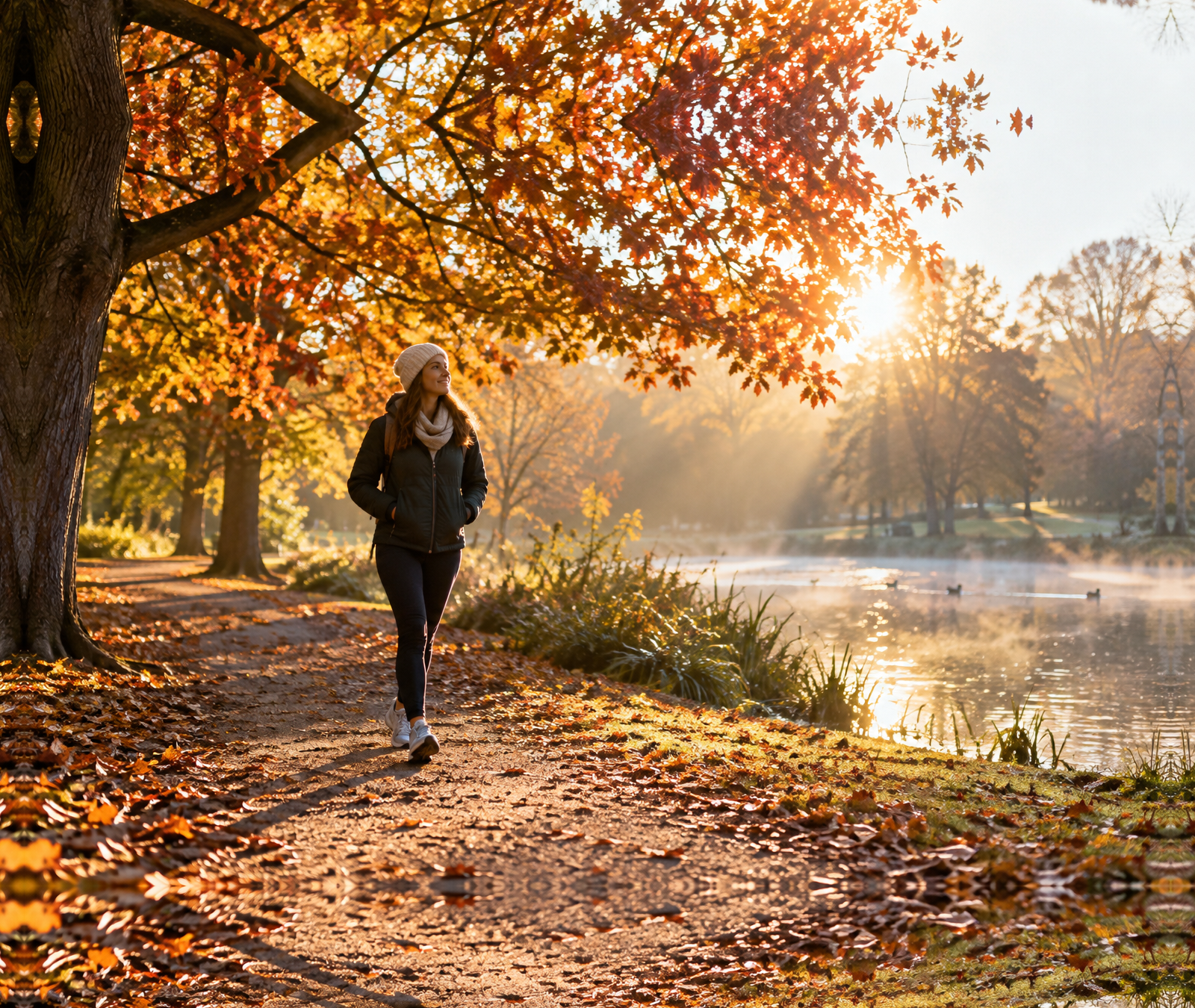
Autumn brings one of the most noticeable changes in daily life in many parts of the world: the hours of daylight decrease as winter approaches. Tourists often notice the difference first when planning an afternoon walk, an outdoor meal or the journey back to their hotel. There is also a health connection. Light is an important signal that helps align the body’s circadian rhythm with the local day.
The body clock responds to light, not only to the clock on a wall
The circadian system helps coordinate sleep and wakefulness. Light reaching the eyes provides information about the time of day. Exposure to natural daylight, particularly at appropriately chosen times, can influence when people feel alert and when their body prepares for sleep.
This does not mean that a short walk will cure insomnia or replace treatment for a sleep disorder. It means that keeping a fairly consistent sleep schedule and spending some time outdoors can support healthy daily routines. The effect varies with age, personal health, location and the season.
Travel makes timing more important
Travellers who cross several time zones may experience jet lag because the internal body clock is temporarily out of sync with local time. The direction of travel matters, and so does the timing of bright light exposure. Public health guidance describes light as a useful tool for helping travellers adjust, but the best timing is not identical for every itinerary.
For a straightforward holiday without a major time-zone change, a simple approach is to plan a morning outdoor activity when practical and keep evening light levels comfortable before sleep. For long-haul travel, personalised timing advice is preferable to following a one-size-fits-all rule.
Make shorter days part of the itinerary
The tourist benefit is practical. In autumn, popular trails, coastal paths and city parks may become dark earlier than summer visitors expect. It is sensible to check local sunset times and allow a margin for returning safely. In mountainous or wooded areas, twilight can arrive earlier along the route than an open-sky sunset time suggests.
There is no need to chase sunshine obsessively. Cloudy daylight still contributes to the natural distinction between day and night, and a relaxed walk can be worthwhile even without clear skies. However, never look directly into the sun, and continue to follow ordinary sun protection advice where ultraviolet exposure is significant.
The connection between weather, tourism and sleep is therefore less mysterious than it may sound: understanding the light-dark cycle helps travellers enjoy the day and plan a calmer night.